
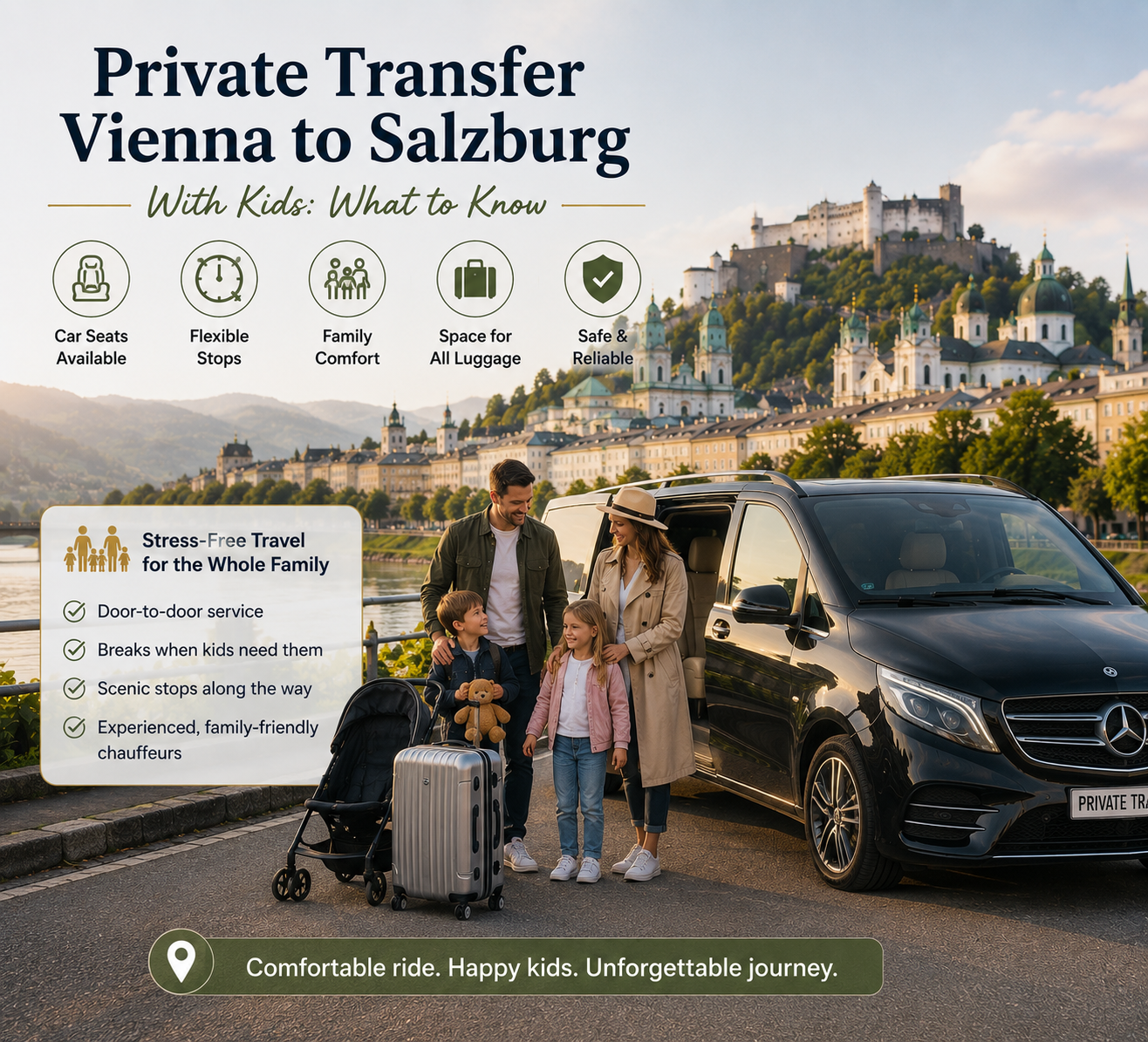
Traveling with children changes what matters most on a Vienna to Salzburg trip. Speed becomes less important than comfort, brakes, and having the right equipment on hand. A private transfer removes many of the small frictions that make family travel harder. This guide covers what to plan for, from car seats to rest stops, before you book.
Quick Answer
A private transfer is generally the easiest way to travel from Vienna to Salzburg with children. It offers door-to-door pickup, room for car seats and strollers, and the flexibility to stop when needed. The direct drive takes about two and a half to three hours, though families often plan for closer to three and a half with a break or two.
Why Families Often Choose a Private Transfer
Public transport works well for many trips, but it adds friction for families. A train ride means managing luggage, car seats, and children on a platform, then repeating the process on arrival. A private transfer picks everyone up at the door. There is no walk through a station and no timed connection to catch.
This matters most with younger children, who often need unplanned breaks. A private car can pull over when needed. A train cannot.
Car Seats and Booster Seats
Most private transfer providers can arrange child car seats or booster seats on request, but this needs to be confirmed at the time of booking. Mention the number of children and their approximate ages so the correct seats are ready. Bringing your own seat is also an option if you prefer a specific model your child is used to.
What to Confirm Before You Book
Ask whether car seats are included in the price or charged separately. Confirm the seat type available, since infant, toddler and booster seats are not interchangeable. If you are bringing your own seat, check that the vehicle has enough space to fit it properly.
Planning for Rest Stops
The direct route passes close to the Wachau Valley, which makes a natural place to stop. Melk Abbey has open grounds where children can stretch their legs. Durnstein offers a short walk and a place to grab a snack. Neither requires a long detour, and both break up the drive at a useful point roughly halfway through the journey.
If your children are very young, plan for shorter, more frequent stops rather than one long one. A ten-minute pause every hour is often more effective than a single forty-five-minute stop.
Packing for the Drive
Snacks, water, and a favorite toy or tablet go a long way on a two- to three-hour drive. Motion sickness can affect some children on winding sections near the Wachau Valley, so keep this in mind if your child is prone to it. A few plastic bags and wipes are worth having on hand just in case.
Timing Your Departure
Many families find it easier to travel around a child’s normal nap schedule, using the drive as rest time rather than fighting against it. An early departure can also mean less road traffic near Linz, which keeps the journey smoother for everyone in the car.
Entertainment for the Drive
A tablet loaded with downloaded shows or games can make a big difference on a two- to three-hour drive. Audiobooks or a favorite playlist work well for children who get restless with screens. Simple travel games, like counting cows or spotting colors out the window, also help pass the time without needing any equipment at all.
Feeding Schedules and Food Stops
If your drive crosses a normal mealtime, plan for it rather than hoping everyone can wait. Durnstein and Krems both have cafes suitable for a quick lunch or snack stop. Packing familiar snacks from home is also worth considering, since young children can be picky about unfamiliar food, especially mid-journey.
What to Expect From the Chauffeur
A chauffeur experienced with family transfers understands that plans can change. A requested stop might run longer than expected, or a child might need an unplanned break. Booking with a provider who is used to family travel generally means more patience and flexibility built into the day.
Naptime and Long Car Seat Sessions
Extended time in a car seat can be uncomfortable for some children, particularly infants. Planning a stop roughly halfway through the drive gives everyone a chance to get out and move, which helps more than pushing straight through for the sake of speed.
Comparing Options for Family Travel
| Factor | Private Transfer | Train | Rental Car |
|---|---|---|---|
| Car seat provided | Yes, on request | Not applicable | Extra rental fee |
| Door-to-door pickup | Yes | No | No |
| Flexible stops | Yes | No | Yes, self-navigated |
| Luggage and stroller space | Included | Self-managed | Self-managed |
| Someone else drives | Yes | Not applicable | No |
A rental car offers similar flexibility to a private transfer, but you still have to drive and manage children at the same time. A private transfer removes that burden entirely, which many parents find worth the extra cost on its own.
Multi-Generation Family Travel
Some families traveling with both children and grandparents need a vehicle that balances car seats with easier access for older passengers. Mentioning the full mix of ages and mobility needs when booking helps ensure the right vehicle size and seating arrangement from the start, rather than adjusting on the day.
Booking Ahead for Peace of Mind
Family trips tend to go more smoothly when the transport is settled early. Confirming your vehicle, car seats and any stops a few days before travel means one less thing to think about on a day already full of packing and logistics.
How Shadow Chauffeur Can Help
Shadow Chauffeur can arrange child car seats and booster seats in advance for Vienna to Salzburg transfers, along with extra space for strollers and luggage. Chauffeurs are familiar with good rest stop points along the route, including Melk Abbey and the Wachau Valley.
Traveling with young children and want a smoother trip to Salzburg? Shadow Chauffeur can plan the vehicle, seats, and stops around your family’s needs.
Vienna to Salzburg city-to-city transfer
Frequently Asked Questions
Can I request a car seat for a private transfer from Vienna to Salzburg?
Yes. Most providers can arrange car seats or booster seats on request. Confirm the number and type needed when you book, since infant, toddler, and booster seats are not interchangeable.
How long does the drive take with a young child?
The direct drive takes about two and a half to three hours. Families traveling with young children often plan for closer to three and a half hours to allow for one or two short rest stops.
Is a private transfer better than the train with kids?
Many parents find it easier since it removes the need to manage luggage, car seats, and children through a station. A private transfer also allows unplanned stops, which a train schedule does not.
Where are good rest stops on the route?
Melk Abbey and the town of Durnstein, both in the Wachau Valley, make convenient stops roughly halfway through the drive. Both offer space to walk and a place to get a snack.
Should I bring my own car seat?
You can, and some parents prefer this if their child is used to a specific model. Confirm with your provider that there is enough space to fit your own seat properly.
What should I pack for the drive?
Snacks, water, a favorite toy, and a change of clothes are common essentials. If your child is prone to motion sickness, plan for this on the winding sections near the Wachau Valley.
Toddlers vs Older Children: Different Needs
Toddlers generally need more frequent stops and closer supervision during breaks, while older children can often handle a longer stretch between pauses. Planning your stop schedule around the youngest child in the group usually works better than assuming everyone has the same tolerance for a long car ride.
What Other Parents Tend to Ask
Common questions include whether the vehicle has enough space for a stroller alongside luggage, whether the chauffeur can wait during a longer stop, and how pickup works if a flight lands with a sleeping infant on board. All of these are worth raising directly when booking, since providers vary in how they handle each situation.
Involving Older Kids in the Planning
Older children and teenagers often enjoy having a say in the itinerary, whether that means choosing which stop to prioritize or picking the music for part of the drive. A small amount of input can make a long car ride feel less like a chore and more like part of the trip itself.
Arriving Tired: Managing the Last Leg
Children often get restless in the final stretch of any drive, regardless of how smooth the earlier part went. Having something new, like a small snack or a fresh activity saved for the end, can help ease the last thirty minutes into Salzburg.
Traveling With a Newborn
A newborn generally sleeps through much of a car journey, provided the infant seat is properly fitted and the ride is smooth. Feeding stops matter more than sightseeing stops at this age, so plan pauses around your baby’s routine rather than the scenic points along the way.
When to Consider Splitting the Journey
For very young infants or a particularly long day already spent traveling, some families choose to break the Vienna to Salzburg trip into two shorter days rather than one long drive. A private transfer can still be arranged for either half, giving flexibility to adjust the plan if the day is not going as expected.
Solo Parents Traveling With Children
A solo parent managing luggage, a stroller, and one or more children benefits the most from having someone else handle the driving and bags entirely. This is one of the clearest cases where the extra cost of a private transfer buys back real energy for the rest of the trip, rather than starting the visit already exhausted from the journey.
A Simple Checklist Before You Travel
Confirm car seats, vehicle size, and any stops a few days ahead. Pack snacks, entertainment, and a change of clothes within easy reach rather than buried in checked luggage. Build a short buffer into your arrival time in Salzburg so an unplanned stop does not turn into a rushed final stretch.
Conclusion
A private transfer takes most of the friction out of traveling from Vienna to Salzburg with children. Door-to-door pickup, flexible stops, and the option to arrange car seats in advance make it a practical choice for families. Plan your rest stops and packing ahead of time, and the drive itself becomes one of the easier parts of the trip.