
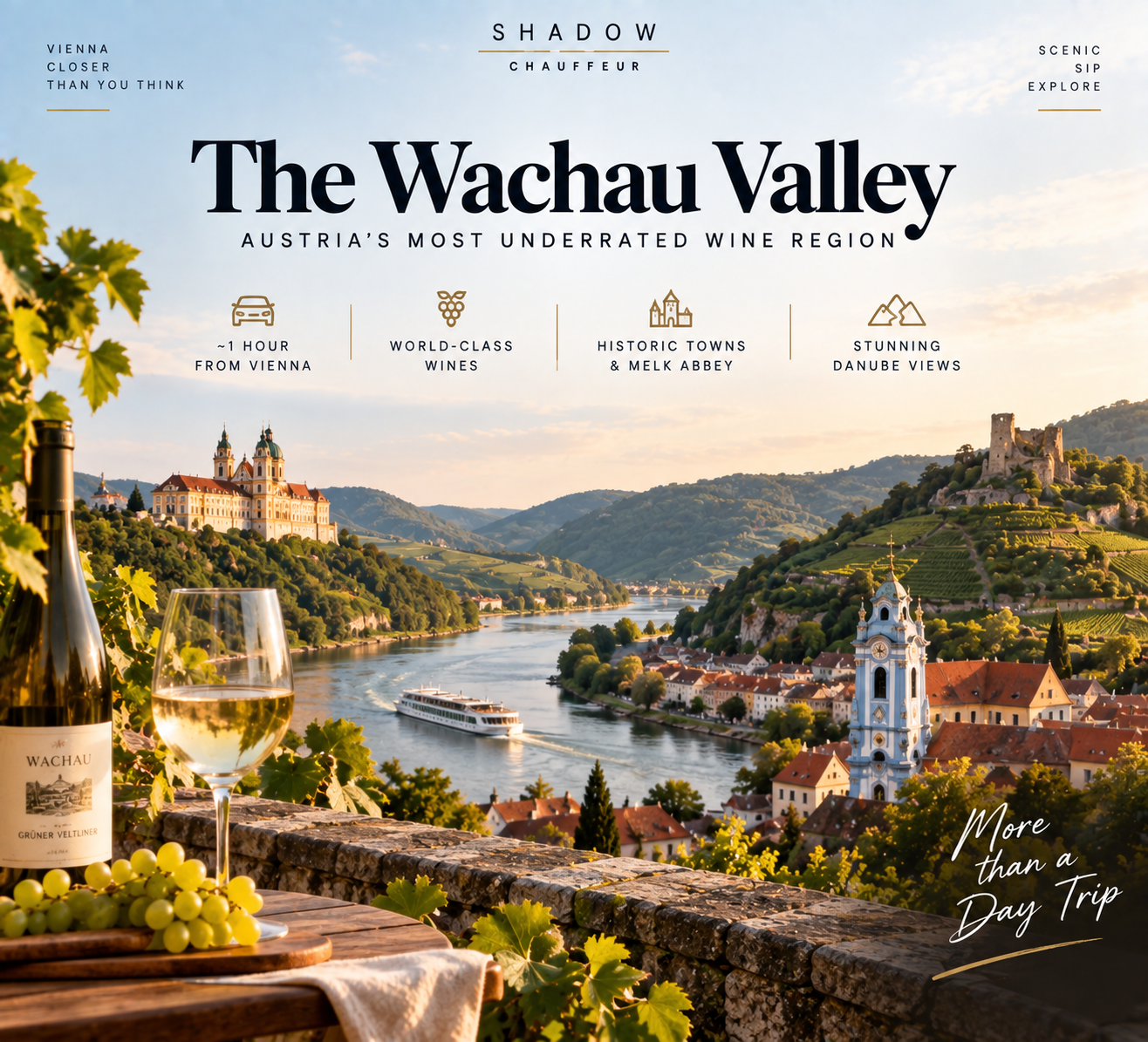
| Quick Facts: The Wachau Valley | |
| Location | Along the Danube, between Melk and Krems |
| Distance from Vienna | ~80–90 km, about 1 hour |
| UNESCO status | World Heritage Cultural Landscape |
| Known for | Terraced vineyards, Riesling and Grüner Veltliner wine, Melk Abbey |
| Best visited as | Half-day trip from Vienna, or a stop en route to Salzburg |
The Wachau Valley sits along the Danube about 80 to 90 kilometers from Vienna. It is roughly an hour’s drive. This is a UNESCO World Heritage Cultural Landscape. It is known for terraced vineyards producing some of Austria’s best Riesling and Grüner Veltliner wine. Despite this, it remains far less visited than Salzburg or Hallstatt. This makes it one of the best-value day trips near Vienna.
Quick Answer
The Wachau Valley is a Danube river valley between Melk and Krems. It is known for wine, terraced vineyards, and historic towns like Dürnstein. It sits about an hour from Vienna. This makes it an easy half-day trip on its own, or a scenic stop on the way to Salzburg. It offers a quieter alternative to Austria’s more famous destinations.
Why the Wachau Valley Is Underrated
Salzburg and Hallstatt draw far more visitors than the Wachau Valley. This is despite the valley’s UNESCO status and genuine scenic appeal. This works in visitors’ favor. Towns like Dürnstein see a fraction of the crowds found at more famous stops. They still offer historic architecture, wine tasting, and river views.
Melk Abbey
Melk Abbey sits on a hill above the Danube at the eastern edge of the valley. The baroque abbey is visible from a considerable distance before you arrive. Most visitors spend around an hour here, touring the interior or walking the grounds and terrace overlooking the river.
Dürnstein
Dürnstein is the valley’s most photographed town. It is known for its blue-spired church. It is also known for the ruins of a castle above the town, where Richard the Lionheart was once held captive. A short walk through the town and a stop for wine or coffee is the typical pace for a visit here.
Krems an der Donau
Krems sits at the eastern gateway to the valley. It offers a slightly larger, more practical stop with cafes, shops, and a historic center of its own. It suits travelers who want a working town rather than a smaller village atmosphere.
The Wine of the Wachau Valley
The valley’s steep, terraced vineyards produce Austria’s most respected Riesling and Grüner Veltliner wines. This benefits from the Danube’s moderating effect on temperature and the terraces’ exposure to sun. Wine tasting rooms throughout the valley let visitors sample local vintages. Many offer views over the vineyards themselves.
How the Terraces Shape the Wine
The valley’s steep slopes require the vineyards to be built into narrow stone terraces, a labor-intensive method that has shaped the region for centuries. This terracing, combined with the valley’s specific mix of sun exposure and cool river air, gives Wachau wines a character distinct from vineyards elsewhere in Austria.
Comparing the Wachau Valley to Other Day Trips
| Factor | Wachau Valley | Salzburg | Hallstatt |
|---|---|---|---|
| Distance from Vienna | ~80–90 km | ~295 km | ~300 km |
| Drive time | ~1 hour | 2.5–3 hours | 3–3.5 hours |
| Crowd levels | Low | High | Very high in summer |
| Known for | Wine and river scenery | History and architecture | Lakeside views |
Best Time of Year to Visit
Spring brings blossoming vineyards and mild weather. Early autumn coincides with the grape harvest, arguably the most atmospheric time to visit. Summer offers the longest days but the most visitors at the popular stops. Winter is quiet, though many wine tasting rooms reduce their hours during the colder months.
Combining the Wachau Valley With Other Stops
The valley’s location makes it a natural stop on the direct route to Salzburg. Travelers can combine a day trip with the start of a longer journey rather than treating it as a separate excursion. It can also be visited entirely on its own as a relaxed half day from Vienna.
How Much Time to Plan
A half day, roughly four to five hours including travel, covers Melk Abbey and a stop in Dürnstein comfortably. A full day allows for a more relaxed pace. It also allows for additional wine tasting stops and time in Krems.
Getting There: Scenic Route by Private Transfer
A private transfer is the most practical way to see the Wachau Valley properly. Public transport options require multiple connections to reach the smaller towns. For full details on combining this route with a Salzburg trip, see the scenic route Vienna to Salzburg page. It covers the Wachau Valley as part of a longer journey.
Traveling With a Group Interested in Wine
Groups specifically interested in wine tasting can request a chauffeur familiar with the valley’s tasting rooms. This allows for a route built around vineyard stops. It differs from the standard sightseeing pattern of Melk and Dürnstein.
Local Food to Try
Riverside restaurants throughout the valley often serve fresh apricots and apricot-based dishes, a local specialty alongside the wine, particularly in summer when the fruit is in season. Pairing a light lunch with a tasting is a common way to spend a couple of hours in Krems or Dürnstein.
Visiting Outside the Main Tourist Season
Late autumn and early spring, just outside the main season, often offer the best balance of open attractions and low visitor numbers, since most wine rooms and shops still operate but the summer crowds haven’t arrived yet.
What Sets Wachau Wine Apart From Other Austrian Regions
Austria has several notable wine regions, but the Wachau’s steep terracing and Danube-moderated climate produce a distinct mineral character in its Riesling that wine enthusiasts often single out compared to flatter, warmer growing regions elsewhere in the country.
Visiting as Part of a Longer Austria Trip
Travelers spending a week or more in Austria often fold the Wachau Valley into a longer route rather than a standalone day trip, using it as a scenic transition point between Vienna and destinations further west such as Salzburg or the Alps.
Historical Background Worth Knowing
The valley’s terraced vineyards have been cultivated since the Roman era, with monasteries such as Melk playing a central role in the region’s winemaking history for centuries. This long history is part of what earned the valley its UNESCO Cultural Landscape status, alongside its physical beauty.
A Simple Way to Plan Your Visit
Decide first whether wine, history, or scenery interests you most, then build the stops around that priority rather than trying to fit in everything on a single half day.
Combining the Valley With an Onward Journey
Travelers continuing to Salzburg or further west can build the Wachau Valley into the start of that journey rather than treating it as a separate round trip from Vienna, making efficient use of a day that already involves significant driving.
Visiting With Non-Wine-Drinkers in the Group
The valley offers plenty beyond wine for travelers who don’t drink, including the abbey, riverside walks, and the towns themselves. A route can be planned to balance wine stops with these other activities so the day works for the whole group.
Visiting Multiple Wineries in One Day
Travelers with a strong interest in wine sometimes plan a route touching three or four tasting rooms in a single visit, spaced across different parts of the valley. This works best with a full day rather than a half day, given the driving time between individual vineyards.
Souvenirs and Local Products
Beyond wine, the valley is known for apricot products, including jams and schnapps made from the local fruit. Small shops in Krems and Dürnstein often carry these alongside wine bottles, making for a practical souvenir that also captures the region’s character.
Cycling Through the Valley
The Wachau Valley is also a well-known cycling route along the Danube, popular with visitors who want to cover more ground at a slower pace than driving allows. This is a separate way to experience the valley for travelers with more time and an interest in an active day rather than a standard sightseeing stop.
Photography in the Valley
Morning light tends to favor the eastern stretches of the valley near Krems, while afternoon light suits the western approach toward Melk. Viewpoints along the road between towns offer wide shots over the terraces and river, often better than photos taken from within the towns themselves.
How to Book
Share your interest, whether that’s history, wine, or scenery, along with your available time. This helps get a route tailored to what you want to see. Half-day and full-day options are both available.
Want to see one of Austria’s best-kept secrets? Shadow Chauffeur can plan a private Wachau Valley day trip around wine, history, or simply the scenery.
Frequently Asked Questions
How far is the Wachau Valley from Vienna?
About 80 to 90 kilometers, roughly an hour’s drive.
What is the Wachau Valley known for?
Terraced vineyards producing Riesling and Grüner Veltliner wine, along with historic towns like Dürnstein and Melk Abbey, all set along the Danube.
Is the Wachau Valley less crowded than Salzburg or Hallstatt?
Yes, it sees considerably fewer visitors despite its UNESCO status, making it a quieter alternative to Austria’s more famous destinations.
Can the Wachau Valley be combined with a trip to Salzburg?
Yes, the valley sits directly on the route to Salzburg, making it a natural stop for travelers continuing further west.
What is the best time of year to visit for wine?
Early autumn coincides with the grape harvest and is considered one of the most atmospheric times to visit for wine-focused travelers.
How much time should I plan for a Wachau Valley visit?
A half day, around four to five hours including travel, covers the main highlights. A full day allows for a more relaxed pace with additional wine tasting stops.
Conclusion
The Wachau Valley offers genuine UNESCO-recognized scenery, respected wine, and historic towns within an hour of Vienna. It has a fraction of the crowds found at Austria’s more famous destinations. Whether visited on its own or combined with a trip to Salzburg, it rewards travelers willing to look beyond the most obvious day trip options.
6 comments on “The Wachau Valley: Austria’s Most Underrated Wine Region”