
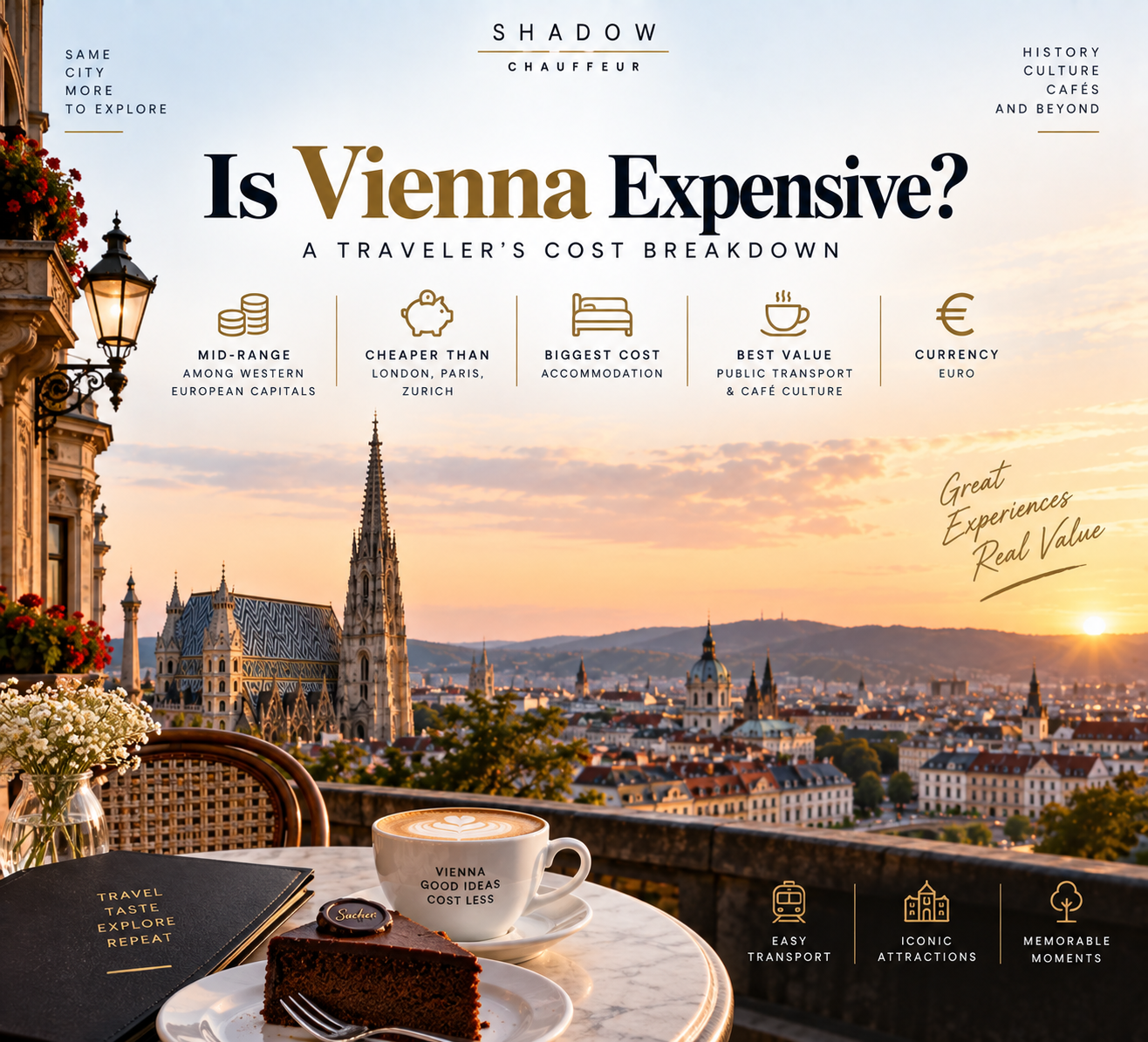
| Quick Facts: Vienna Cost Level | |
| Overall comparison | Mid-range among Western European capitals |
| Cheaper than | London, Paris, Zurich |
| Biggest cost | Accommodation, especially in the historic center |
| Best value category | Public transport and coffeehouse culture |
| Currency | Euro |
Vienna sits in the mid-range for Western European capitals. It costs less than London, Paris, or Zurich, but it is not a budget destination either. Accommodation is the biggest variable in most travel budgets. Public transport and the city’s cafe culture offer some of the best value. This guide breaks down the main cost categories to help you plan realistically.
Quick Answer
Vienna is moderately priced for a major European capital. It costs less than London, Paris, or Zurich. It costs more than many Central and Eastern European cities. Accommodation drives most of the variation in a traveler’s total budget. Food, transport, and attractions generally fall into predictable mid-range categories.
Accommodation Costs
Accommodation is the largest and most variable expense for most visitors. Budget hostels and simple guesthouses sit at the lower end. Mid-range hotels make up the bulk of typical bookings. Luxury hotels in the historic center command a significant premium. Staying slightly outside the first district generally reduces cost without adding much travel time.
Food and Dining
Vienna’s cafe culture offers excellent value. A coffee and pastry at a traditional Kaffeehaus costs far less than a full restaurant meal. Casual restaurants and traditional Austrian taverns, known as Beisl, offer reasonably priced meals. Fine dining in the city center sits at the higher end, comparable to other major European capitals.
Grocery and Self-Catering
Travelers with kitchen access can reduce food costs meaningfully. Shopping at local supermarkets is generally competitively priced compared to eating out for every meal.
Public Transport
Vienna’s public transport system is efficient and reasonably priced. Day and multi-day passes offer good value for visitors covering multiple sights. This is one of the clearer cost advantages Vienna holds over several other major European capitals.
Attractions and Museums
Major sights like Schönbrunn Palace and the Belvedere charge standard entry fees. These are comparable to similar attractions elsewhere in Europe. Some museums offer free or discounted entry on specific days or evenings, worth checking if you’re visiting several.
Comparing Vienna to Other European Capitals
| City | General Cost Level | Compared to Vienna |
|---|---|---|
| London | High | Noticeably more expensive |
| Paris | High | Generally more expensive |
| Zurich | Very high | Considerably more expensive |
| Vienna | Mid-range | Baseline |
| Budapest | Lower | Generally cheaper |
Solo Travelers vs Groups
Solo travelers generally pay more per person for accommodation, since single rooms rarely cost half of a double. Groups and families benefit from shared accommodation costs and per-vehicle transport pricing, which can make group travel comparatively better value overall.
Private Transport vs. Public Transport Costs
Public transport is the most economical way to move around Vienna itself. A private chauffeur costs more. It offers convenience, comfort, and time savings. These matter more on specific occasions, such as an airport transfer with luggage or a special event, than for everyday city sightseeing.
Comparing a Short Trip vs. a Longer Stay
A short two or three-day trip concentrates cost into accommodation and a few key attractions, while a longer stay spreads fixed costs like transport passes across more days, generally lowering the average daily spend the longer the visit runs.
Seasonal Price Variation
Accommodation and flight prices both rise during peak season. This runs roughly late spring through early autumn, and around the Christmas market period in December. Traveling in shoulder seasons, such as March or late October, generally offers better value. Weather and open attractions aren’t sacrificed much either.
Hidden Costs to Watch For
Some attractions charge separately for photography permits or audio guides beyond the base entry fee. Checking what’s included before purchasing a ticket avoids small surprises adding up across several sights during a longer visit.
Budgeting for a Day Trip
Day trips from Vienna add their own cost layer, whether via train, private transfer, or rental car. A private transfer costs more than public transport. It is priced per vehicle, though, which can work out comparably for groups once train tickets for several people are added up.
Business Travel Cost Considerations
Business travelers often have different priorities than leisure visitors, valuing time savings and reliability over the lowest possible price. A fixed-price executive transfer, for example, trades a higher cost for predictability that matters more on a work trip.
Tipping Customs
Tipping in Vienna is customary but modest compared to some countries. It typically means rounding up a bill or adding a small percentage in restaurants. This is worth budgeting into a daily estimate. It adds relatively little to overall costs compared to accommodation or dining choices.
Family Travel Budgeting
Families traveling with children face additional costs for larger accommodation and family-sized meals, though many attractions offer reduced admission for younger visitors. A private transfer, priced per vehicle rather than per person, can also work out more economical than several individual public transport tickets for a larger family.
Comparing to Nearby Day Trip Destinations
Bratislava and Budapest both tend to run cheaper than Vienna for food and accommodation, which is worth factoring in if extending a Vienna trip with a day or two in either city as part of the same visit.
How to Keep Costs Down
Staying slightly outside the historic center helps. Using public transport passes and taking advantage of free museum days also helps. These are the most effective ways to reduce costs without significantly compromising the visit. Booking accommodation and transfers in advance tends to secure better rates than last-minute arrangements.
How to Book Transport for Your Trip
For airport transfers or day trips, share your route and dates to get a fixed quote. This keeps transport costs known in advance rather than left as an open variable in your budget.
Planning a trip to Vienna and want transport costs locked in early? Shadow Chauffeur can provide a fixed quote for airport transfers and day trips.
Frequently Asked Questions
Is Vienna expensive compared to other European capitals?
Vienna sits in the mid-range, generally cheaper than London, Paris, or Zurich, but pricier than several Central and Eastern European cities.
What is the biggest expense for most visitors?
Accommodation typically accounts for the largest share of a traveler’s budget, with location in the city playing a major role in price.
Is public transport good value in Vienna?
Yes, Vienna’s public transport is generally considered one of the better value aspects of visiting, especially with a multi-day pass.
Is tipping expected in Vienna?
Yes, modest tipping is customary in restaurants, typically rounding up a bill or adding a small percentage.
When is the cheapest time to visit Vienna?
Shoulder seasons, such as March or late October, generally offer better accommodation value than peak summer or the December Christmas market period.
Is a private transfer worth the extra cost over public transport?
For airport transfers, luggage-heavy trips, or special occasions, many travelers find it worthwhile, though public transport remains the more economical choice for everyday city movement.
Conclusion
Vienna is a mid-range European capital, more affordable than London, Paris, or Zurich. Accommodation is the main driver of overall cost. Careful timing and location choices can meaningfully reduce a trip’s total budget without sacrificing the experience.