
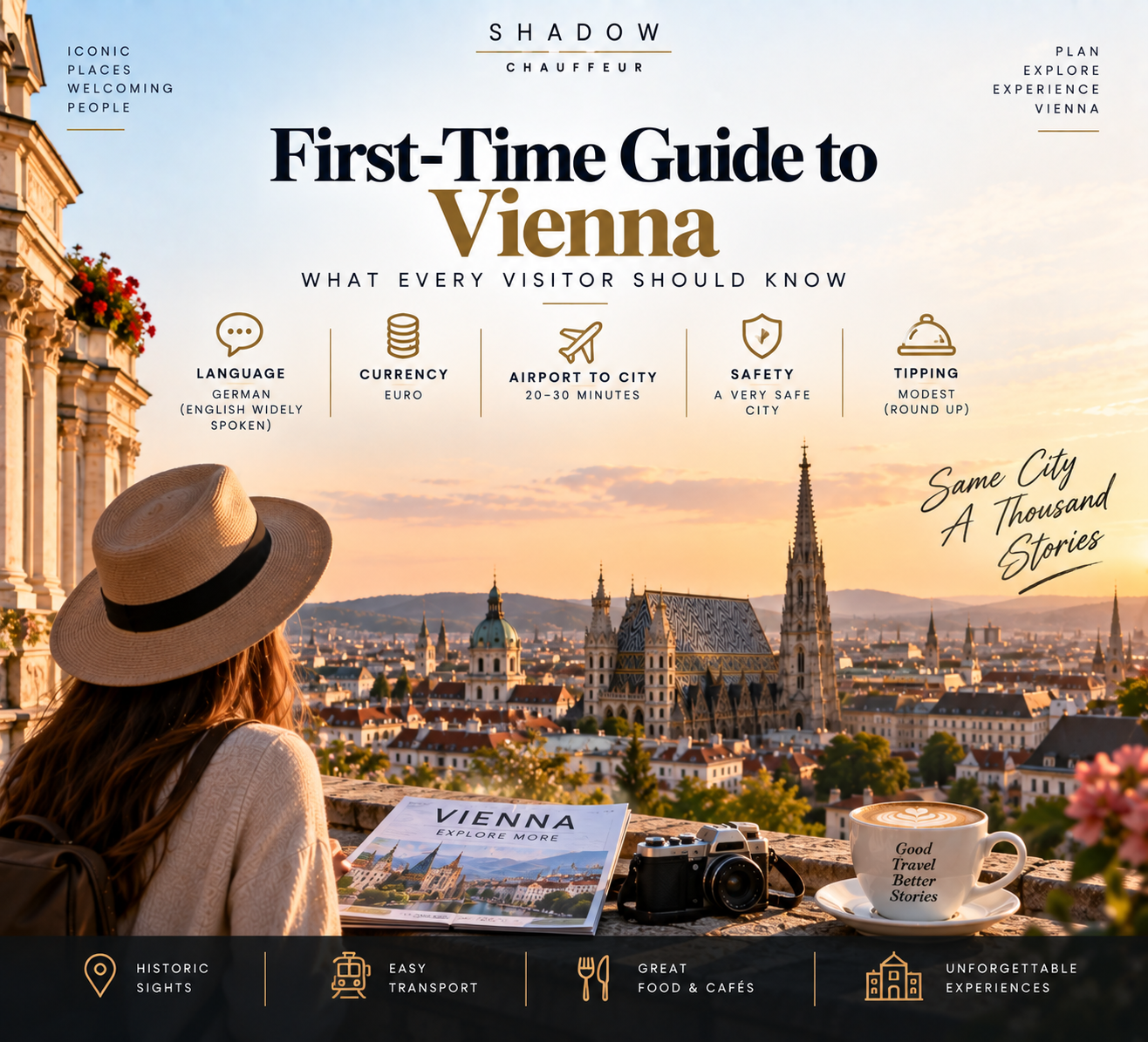
| Quick Facts: Vienna for First-Time Visitors | |
| Language | German, with English widely spoken in tourist areas |
| Currency | Euro |
| Getting from the airport | Train, taxi, or private transfer, about 20–30 minutes to the center |
| Safety | Generally considered a very safe major city |
| Tipping | Modest, typically rounding up or a small percentage |
Vienna is a straightforward city for first-time visitors, with excellent public transport, widely spoken English in tourist areas, and a reputation as one of the safer major European capitals. This guide covers the practical basics worth knowing before you arrive, from getting into the city to local customs around tipping and dining.
Quick Answer
Vienna uses the euro, German is the primary language with English widely understood in tourist areas, and the city is considered very safe. Getting from the airport takes about 20 to 30 minutes by train, taxi, or private transfer. Tipping is modest but customary in restaurants.
Getting From the Airport
Vienna International Airport sits about 18 kilometers from the city center. The City Airport Train reaches Wien Mitte station in around 16 minutes, a regional train is slightly slower but cheaper, and a taxi or private transfer takes roughly 20 to 30 minutes depending on traffic, with the advantage of door-to-door drop-off.
Getting Around the City
Vienna’s public transport system, including trams, the U-Bahn subway, and buses, covers the city comprehensively and reliably. A day pass or multi-day pass is worth considering for visitors planning to move around frequently. The historic center itself is compact and highly walkable.
Language
German is Vienna’s primary language, but English is widely spoken in hotels, restaurants, and tourist-facing businesses. Learning a few basic German phrases is appreciated but not essential for a comfortable visit.
Emergency Numbers and Practical Help
The general European emergency number, 112, works throughout Austria for police, fire, or medical emergencies. Hotel staff are also generally a reliable first point of contact for any practical issue during a visit.
Money and Payment
Vienna uses the euro. Card payment is widely accepted, including for smaller purchases, though carrying some cash is still useful for markets, small cafes, or Heurigen wine taverns that may prefer it.
Safety
Vienna is consistently ranked among the safest major cities in Europe. Standard travel precautions, such as watching belongings in crowded tourist areas, are still sensible, but violent crime against visitors is rare.
Tipping Customs
Tipping in restaurants is customary but modest, typically rounding up the bill or adding a small percentage rather than the larger tips expected in some other countries. For taxis and other services, a similar modest rounding up is standard practice.
Electrical Outlets and Practical Basics
Austria uses the standard European two-pin plug and 230V electricity, so travelers from countries with different systems will need an adapter. Wi-Fi is widely available in hotels, cafes, and many public spaces throughout the city.
Dining Etiquette
Traditional Austrian taverns, known as Beisl, offer a relaxed, casual dining experience, while formal restaurants expect slightly more conventional etiquette. It’s common to wait to be seated rather than choosing your own table in most sit-down restaurants.
Opening Hours to Know
Many shops close earlier on Saturdays and remain closed on Sundays, a pattern that catches some first-time visitors off guard. Museums and major attractions generally stay open throughout the week, though checking specific hours before a planned visit avoids disappointment.
Public Holidays to Be Aware Of
Austria observes several public holidays throughout the year when shops and some attractions close entirely, more restrictively than a typical Sunday. Checking the calendar for your travel dates avoids arriving to find planned stops unexpectedly shut.
When to Visit
Spring and early autumn offer mild weather and comfortable sightseeing conditions. Summer brings the longest days but also the most visitors. Winter is quieter, with the added appeal of Vienna’s well-known Christmas markets in December.
What to Pack
Comfortable walking shoes are essential given how much of the city rewards exploring on foot. A layer for cooler evenings is worth packing even in summer, and more substantial layers are needed for winter, when temperatures regularly drop below freezing.
Accessibility for Visitors With Mobility Needs
Vienna’s public transport system is generally well equipped with accessible options, and many major attractions have step-free access. Checking specific accessibility details for planned stops ahead of time is still worth doing, since older buildings can have limitations.
Common First-Timer Mistakes to Avoid
Underestimating Sunday closures is a common mistake, as is assuming a taxi rank will have short waits during peak arrival times at the airport. Planning around both in advance avoids unnecessary frustration on the trip.
Essential First Stops for a First-Time Visit
St. Stephen’s Cathedral and the historic center around it make a natural starting point, orienting you to the city’s layout. Schönbrunn Palace and the Belvedere are the two other essential stops most first-time visitors prioritize.
Airport Transfer Options
For a straightforward, door-to-door arrival, a private transfer with flight tracking removes the guesswork of navigating public transport after a long flight. For full details, see the luxury airport transfer Vienna page.
Planning Your First Few Days
For a structured approach to your first visit, see the 3 days in Vienna itinerary, which lays out a day-by-day plan covering the city’s essential sights.
How to Book Transport for Your Visit
Whether you need an airport pickup or transport for sightseeing, share your dates and plans to get a fixed quote arranged before you arrive.
Planning your first trip to Vienna? Shadow Chauffeur can arrange your airport transfer and any sightseeing transport in advance.
Frequently Asked Questions
Is Vienna safe for first-time visitors?
Yes, Vienna is consistently ranked among the safest major cities in Europe, though standard travel precautions are still sensible.
Do I need to speak German to visit Vienna?
No, English is widely spoken in hotels, restaurants, and tourist-facing businesses, though a few basic German phrases are appreciated.
How do I get from the airport to the city center?
The City Airport Train, a regional train, a taxi, or a private transfer are all options, taking roughly 16 to 30 minutes depending on the choice.
Is tipping expected in Vienna?
Yes, modest tipping is customary in restaurants, typically rounding up the bill or adding a small percentage.
What should I know about shop opening hours?
Many shops close earlier on Saturdays and stay closed on Sundays, which can catch first-time visitors off guard when planning shopping.
When is the best time to visit Vienna for a first trip?
Spring and early autumn offer the most comfortable weather, though winter’s Christmas markets and summer’s long days both have their own appeal.
Conclusion
Vienna is an easy city for first-time visitors, with reliable public transport, widely spoken English, and a strong safety record. A little preparation around tipping customs, opening hours, and getting from the airport makes the first visit considerably smoother.