
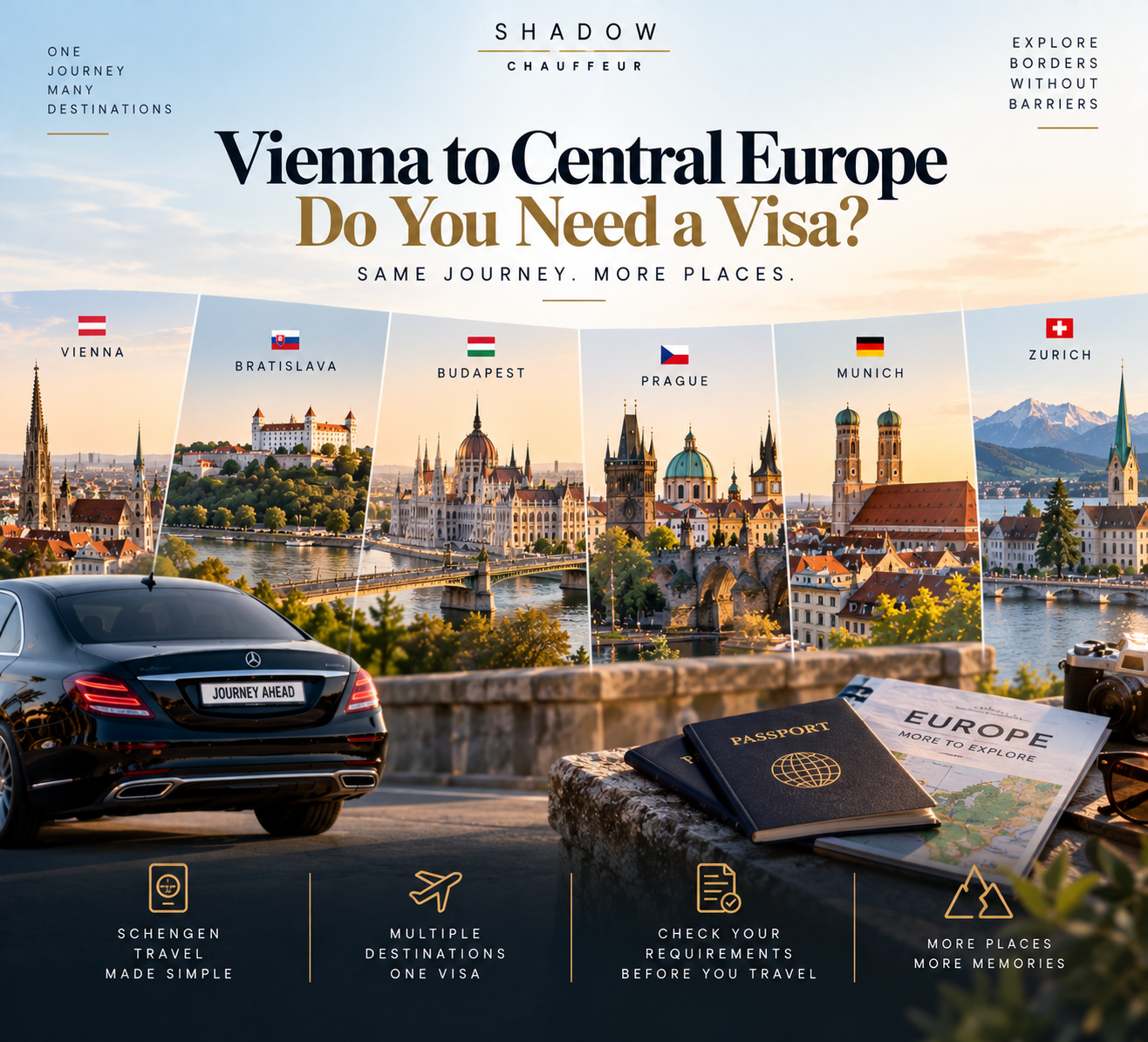
| Quick Facts: Schengen and Border Crossings From Vienna | |
| Austria | Schengen area member |
| Slovakia (Bratislava) | Schengen area member |
| Hungary (Budapest) | Schengen area member |
| Czech Republic | Schengen area member |
| Germany, Switzerland | Schengen area members |
| Checkpoint on internal borders | None under normal conditions |
Austria, Slovakia, Hungary, the Czech Republic, Germany, and Switzerland are all part of the Schengen area, which means no routine passport checkpoint at the internal borders between them. This is general, factual orientation, not personalized visa advice. Requirements still depend entirely on your nationality, so always confirm with an official government source before traveling.
Quick Answer
Whether you need a visa depends on your nationality, not on which of these specific countries you’re visiting, since they’re all part of the same Schengen area. A Schengen visa, where required, generally covers travel across all of them. Always confirm your specific requirement with an official source, since rules can change.
What the Schengen Area Actually Means
The Schengen area is a group of European countries that removed routine passport checks at their shared internal borders. Austria and its common day-trip and city-to-city neighbors, including Slovakia, Hungary, the Czech Republic, Germany, and Switzerland, are all members. Crossing between them typically feels like crossing a state line rather than an international border.
What This Means for a Private Transfer
A private transfer between Vienna and a nearby Schengen country, such as Salzburg to Munich or Vienna to Bratislava, involves no routine checkpoint stop. The chauffeur simply drives across, though carrying a valid passport or ID is still worth doing, since spot checks do occasionally occur.
Do You Need a Visa?
This depends entirely on your nationality and passport, not on which specific Schengen country you’re visiting. Citizens of many countries can enter the Schengen area visa-free for short stays, while others need a Schengen visa arranged in advance. This varies enough by nationality that no general guide can answer it for you specifically.
Where to Check Your Specific Requirement
The most reliable source is the website of the Austrian embassy or consulate in your home country or your own country’s foreign travel advisory service. These are updated directly by the relevant government and reflect current rules, unlike third-party summaries that can become outdated.
Traveling With a Group of Mixed Nationalities
Groups or wedding parties with travelers from different countries sometimes face different visa requirements within the same trip. Each traveler should check their own nationality’s requirement individually rather than assuming the group shares one answer.
Countries This Applies To
| Country | Schengen Member | Common Route From Vienna |
|---|---|---|
| Slovakia | Yes | Bratislava day trip |
| Hungary | Yes | Budapest day trip |
| Germany | Yes | Vienna to Munich transfer |
| Switzerland | Yes | Vienna to Zurich transfer |
| Czech Republic | Yes | Prague day trip or transfer |
What Changes When Traveling With Children
Children generally follow the same visa rules as adults for their nationality, though some countries have additional documentation requirements for minors traveling internationally, such as parental consent letters. This is worth checking alongside the standard visa question.
Non-Schengen Neighbors to Be Aware Of
Not every nearby country is a Schengen member. If your itinerary extends beyond the countries listed above, check that country’s status specifically, since border procedures and document requirements can differ meaningfully outside the Schengen area.
Travel Insurance Considerations
Travel insurance is a separate matter from visa requirements, but worth arranging regardless of your nationality or visa status. Confirming your policy covers all the countries on your itinerary, not just Austria, is worth doing before a multi-country trip.
Documents Worth Carrying Regardless
A valid passport or national ID, appropriate for the country you hold citizenship in, is worth carrying on any cross-border trip, even within Schengen. Spot checks occur occasionally, and having documents on hand avoids any delay if one happens during your trip.
How a Private Transfer Handles Border Crossings
A private chauffeur handles standard driving formalities as part of the service on any cross-border route, whether to Bratislava, Budapest, Munich, or Zurich. This does not replace your own responsibility to carry valid documents and confirm your visa status in advance.
How Long You Can Stay Visa-Free
For nationalities that don’t require a visa, the common Schengen rule allows up to 90 days within any 180-day period across the whole area, not per country. This counts cumulative days across all Schengen countries visited, not a fresh 90 days for each one.
Planning Ahead for a Visa Application
If your nationality requires a Schengen visa, applications typically need to be submitted several weeks before travel, sometimes longer during peak season. Building this into your trip planning timeline early avoids a last-minute scramble before a booked transfer or day trip.
Digital Entry Systems to Watch For
The European Union has introduced digital entry and travel authorization systems in recent years, which may apply depending on your nationality and travel dates. Checking current requirements close to your travel date, rather than relying on older information, is worth doing given how these systems continue to evolve.
Questions to Ask an Official Source
When checking with an embassy or official travel advisory, confirm whether you need a visa at all, how long a visa-free stay lasts if one applies, and whether any specific document beyond a passport is required for your nationality.
How This Relates to Booking a Transfer
Confirming your own documentation is a separate step from booking transport. For route-specific details on any of the trips mentioned here, see the dedicated pages: Vienna to Munich, Vienna to Zurich, and Bratislava vs Budapest.
How to Book
Once your documentation is confirmed, share your route and travel dates to arrange a private transfer. Shadow Chauffeur can help with the driving; your embassy or consulate is the right source for your specific visa question.
Frequently Asked Questions
Do I need a visa to travel from Vienna to Bratislava or Budapest?
This depends entirely on your nationality, since both are Schengen members like Austria. Check with an official government source for your specific requirement.
Is there a passport checkpoint between Austria and its Schengen neighbors?
No routine checkpoint exists under normal conditions, though carrying valid identification is still recommended in case of a spot check.
Does one Schengen visa cover Vienna, Munich, Zurich and Budapest?
Generally yes, a Schengen visa covers travel across all Schengen member countries, though you should confirm this applies to your specific visa type.
Where should I check my exact visa requirement?
The embassy or consulate of Austria in your home country, or your own country’s official foreign travel advisory service, are the most reliable sources.
Is Switzerland part of the Schengen area?
Yes, Switzerland is a Schengen area member, despite not being a European Union member state.
How far in advance should I apply for a Schengen visa if I need one?
Several weeks ahead is generally recommended, with more lead time advisable during peak travel seasons.
Conclusion
Austria, Slovakia, Hungary, the Czech Republic, Germany, and Switzerland are all part of the Schengen area, which simplifies travel between them considerably. Whether you personally need a visa depends on your nationality, not the destination, so always confirm with an official source before booking your trip.